Employee recognition day ideas can transform your workplace culture and drive measurable business results. Whether you’re planning your first recognition event or refreshing your existing program, the right approach makes employees feel valued and strengthens team cohesion.
Recognition isn’t just a nice gesture. Companies with formal programs experience 31% lower voluntary turnover compared to those without structured appreciation efforts. That translates to real cost savings and stronger team stability. The good news? Meaningful recognition doesn’t require unlimited budgets. From handwritten notes to premium experiences, you can find employee recognition day ideas that fit your resources while delivering authentic appreciation.
Transform your workplace culture and drive tangible results with Group Dynamix! Whether you’re launching your first employee recognition event or looking to enhance your existing program, we’re here to help you create meaningful experiences that make your employees feel valued. Contact us today to discover tailored strategies and innovative ideas that fit your budget and drive team cohesion. Let’s celebrate your team together!
Benefits of Corporate Team Building?
Benefits of Corporate Team Building?
TL;DR:
This guide presents 30 practical employee recognition day ideas across three budget categories, helping you celebrate National Employee Appreciation Day 2025 on March 7. Whether you’re working with minimal resources or planning a premium experience, these strategies deliver authentic appreciation while strengthening workplace relationships.
Key Points:
-
- Budget-friendly options (under $50) include peer recognition programs, gratitude walls, and skill-swap workshops that cost little but deliver high impact
- Mid-range investments ($50-200) feature catered events, wellness packages, and professional development opportunities that demonstrate tangible commitment
- Premium experiences ($200+) encompass weekend retreats, conference tickets, and customized award ceremonies for maximum recognition impact
- Well-recognized employees are 7 times more likely to be fully engaged at work
- Recognition works best when personalized, timely, and aligned with individual preferences rather than one-size-fits-all approaches
- Effective recognition programs save up to $16.1 million annually in turnover costs for 10,000-person companies
Budget vs. Impact Comparison
|
Budget Tier |
Cost Per Employee |
Implementation Time |
Typical ROI Indicators |
|
Budget-Friendly |
Under $50 |
1-2 weeks |
31% lower turnover, improved daily morale |
|
Mid-Range |
$50-200 |
2-4 weeks |
14% higher engagement, measurable performance gains |
|
Premium |
$200+ |
1-3 months |
11.1% performance increase, long-term culture shift |
Choosing the Right Recognition Strategy
Before diving into specific ideas, understanding your organization’s unique needs prevents wasted effort and misaligned recognition. Not every idea suits every workplace, and choosing poorly leads to disengagement rather than appreciation.
Assess Your Starting Point:
Consider your company culture. Formal organizations may find casual recognition feels forced, while startups might see traditional awards as stuffy. A financial services firm implementing “Wacky Hat Day” recognition will likely flop, whereas a creative agency might embrace it enthusiastically.
Employee demographics matter significantly. A primarily Gen Z workforce might prefer public social media recognition and experiences over traditional plaques. Remote-first companies need digital-first strategies, while in-person teams benefit from shared physical experiences. Survey your team about recognition preferences rather than guessing. Simple questions like “Do you prefer public or private recognition?” and “What makes you feel most valued at work?” reveal critical insights.
Identify existing recognition gaps. Do managers acknowledge daily contributions but miss milestone achievements? Does one department receive frequent recognition while another feels invisible? Understanding current blind spots helps target improvements effectively.
Define Measurable Goals:
Recognition without measurement becomes a feel-good exercise lacking business justification. Establish baseline metrics before implementing new strategies. Track participation rates to ensure programs reach all employees, not just vocal participants. Monitor whether recognized employees show performance improvements compared to non-recognized peers. Compare retention rates before and after program implementation, watching for the 31% reduction achieved by best-in-class programs.
Organizations that spend at least 1% of payroll on recognition see an 85% boost in employee engagement. Set realistic targets based on your current state, then track progress quarterly rather than waiting for annual reviews.
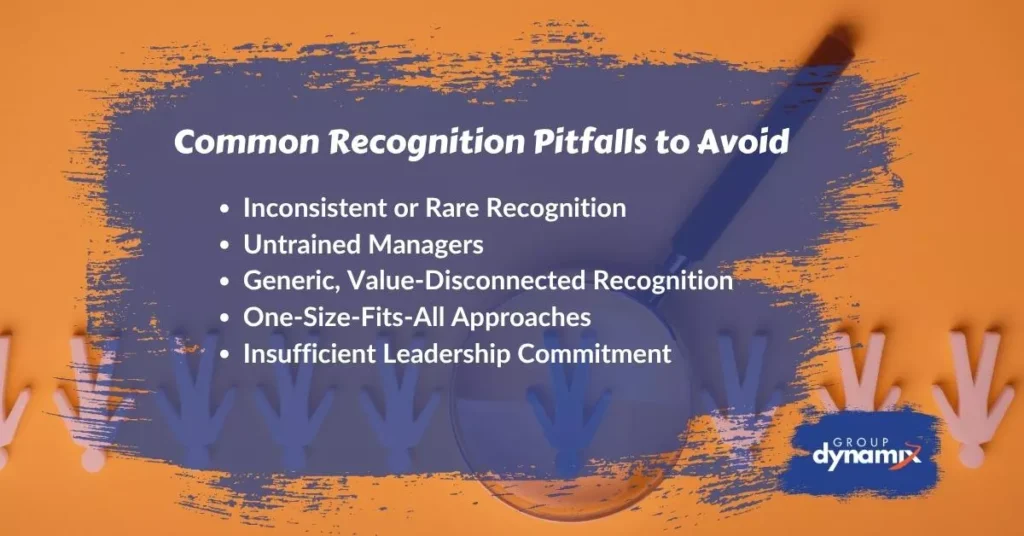
Common Recognition Pitfalls to Avoid
Understanding where recognition programs fail helps you design better strategies from the start. The difference between effective and ineffective recognition often lies in execution details rather than budget size.
Inconsistent or Rare Recognition
The single most common failure point? Recognition that happens sporadically rather than consistently. Only 1 in 3 workers received recognition for their work in the past week, and 65% of employees report not having received any form of recognition in the last year. When appreciation arrives unpredictably, employees can’t connect it to specific behaviors or achievements.
The solution requires embedding recognition into regular workflows. Companies with structured, frequent recognition see 14% higher engagement and productivity. Schedule weekly team shout-outs, implement peer-to-peer platforms for ongoing appreciation, or establish manager check-ins specifically for recognition. Consistency matters more than individual gesture size.
Untrained Managers
Here’s a sobering statistic: only 22% of managers say they are equipped to understand how to recognize their employees. Organizations assume recognition comes naturally, but meaningful acknowledgment requires specific skills. Generic “good job” comments feel hollow compared to detailed recognition connecting actions to outcomes.
Train managers on delivering specific, timely recognition. Provide templates, prompts, and regular coaching. When managers consistently acknowledge contributions, employees are five times more likely to stay. The investment in manager training pays immediate dividends through improved retention and engagement.
Generic, Value-Disconnected Recognition
Recognition is the most important driver of great work for 37% of employees, but only when it feels meaningful. Programs rewarding tenure alone or using vague criteria leave employees confused about what behaviors actually matter. Recognition that fails to connect with core values or strategic goals becomes noise rather than signal.
Link every recognition moment to specific company values or measurable achievements. Instead of “Employee of the Month,” create “Innovation Champion” or “Customer Excellence Award” tied to documented contributions. When employees see clear connections between their actions and organizational priorities, recognition reinforces desired behaviors effectively.
One-Size-Fits-All Approaches
82% of employees feel they do not get enough recognition for their work, often because recognition doesn’t match their preferences. Remote workers feel particularly excluded, with 49% reporting less recognition than in-office peers. Some people crave public celebration while others find it mortifying. Some value experiences while others prefer tangible rewards.
Personalize recognition by understanding individual preferences through simple conversations or surveys. Create multiple recognition pathways ensuring both introverts and extroverts, remote and in-person employees, and different personality types all receive appreciation matching their comfort zones. Remote employees who receive regular recognition are five times less likely to seek new jobs.
Insufficient Leadership Commitment
Recognition programs often launch with enthusiasm but fade when leadership treats them as optional rather than strategic priorities. Without dedicated budget, time, and personnel, even well-designed programs collapse under competing demands.
Secure executive sponsorship and allocate sustainable resources. Companies with strategic, well-resourced programs see 23.4% lower turnover than those without. Treat recognition as a core business strategy with clear ownership, regular reviews, and accountability for results.
Budget-Friendly Recognition Ideas (Under $50 per employee)
Smart recognition doesn’t demand massive budgets. The most effective appreciation often comes from authentic, personalized gestures that show genuine attention to individual contributions. Research confirms that 69% of employees would work harder if they felt better appreciated, proving that thoughtful low-cost recognition delivers outsized returns.
Personalized thank-you notes and handwritten cards
Handwritten recognition stands out in our digital age. Take five minutes to write specific details about each employee’s contribution. Mention the exact project, the challenge they solved, or the quality they demonstrated. Generic praise feels hollow, but specific acknowledgment shows you truly noticed their work.
Store a box of quality cards in your desk drawer. Write three to five notes each week rather than attempting mass production before employee appreciation day. Employees often keep meaningful cards for years, displaying them at their desks as reminders of valued contributions.
Implementation Reality Check: Many managers start strong but abandon handwritten notes within weeks. The fix? Block 15 minutes every Friday afternoon specifically for note-writing. Keep a running list of recognition-worthy moments throughout the week so you don’t draw blanks when sitting down to write. If legibility concerns you, typed notes work fine as long as they remain specific and personal.
Peer-to-peer recognition program
Empower employees to recognize each other directly. Typeform uses a peer recognition system where employees receive “typecoins” they can redeem for gift cards or charitable donations. Southwest Airlines’ SWAG program enables employees to grant each other gratitude points, typically redeemed within a $25-$50 range, generating high engagement rates.
Even simple systems work. Provide recognition cards that employees write and deliver to colleagues, then enter into monthly drawings. The act of giving recognition benefits both parties, strengthening workplace relationships while normalizing appreciation as everyone’s responsibility.
Gratitude wall or appreciation board
Transform a common area wall into a physical space for appreciation. Provide colorful sticky notes, markers, and simple prompts like “Thank you for…” or “I appreciate how you…” Anyone can add messages anytime, creating an organic recognition flow.
Refresh the wall quarterly by photographing all messages and creating a digital archive. Share highlights in team meetings to amplify impact. This simple tool generates surprising depth of appreciation as employees discover unexpected recognition from colleagues across departments.
Skill-swap workshops between colleagues
Your team possesses diverse talents beyond job descriptions. Create monthly lunch-and-learn sessions where employees teach colleagues a skill they’ve mastered. The graphic designer might share basic Photoshop techniques. The Excel wizard could demonstrate pivot table shortcuts.
These workshops accomplish multiple goals. They provide valuable learning, showcase hidden talents, and build cross-functional relationships. Schedule them during lunch, provide simple refreshments, and rotate facilitators. Employees appreciate both learning new skills and gaining recognition as experts worth learning from.
Public recognition on company social media
Spotlight team members on your organization’s social channels with their permission. Share specific achievements, work anniversaries, or contributions that moved projects forward. Tag employees and include professional photos that showcase their personality.
Create a consistent hashtag for recognition posts. This builds a searchable archive of appreciation and encourages participation. Some companies feature “Team Member Tuesday” or “Wins Wednesday” series that normalize regular recognition. Just verify comfort levels first, as some people prefer private appreciation over public visibility.
Themed dress-up day with prizes
Inject fun into the workplace with creative themed days. Try “Decade Day” where teams dress from favorite eras, “Career Day” showcasing childhood dream jobs, or “Color Wars” with department-based teams. Award simple prizes like prime parking spots, early dismissal, or lunch with leadership.
The key lies in optional participation and inclusive themes. Avoid costumes requiring significant expense. The energy and laughter generated create memorable team bonding that extends beyond the event itself.
Office playlist created by employees
Music shapes workplace atmosphere. Create a collaborative company playlist where everyone contributes favorite songs. Share it on a streaming platform and play it during appropriate work hours. This simple gesture shows you value employees’ preferences and creates shared cultural touchpoints.
Rotate playlist curators monthly. Feature their selections in team communications and explain why they chose particular songs. Music becomes a talking point that connects people across different work styles and generations.
Company-wide shout-out emails
Establish a regular cadence for company-wide recognition emails. Feature three to five employees weekly with detailed descriptions of their contributions. Include photos and quotes from colleagues who witnessed their excellent work.
Keep the tone conversational and specific. Instead of “Sarah worked hard,” write “Sarah stayed late three nights restructuring our database, cutting report generation time from 20 minutes to 90 seconds.” Concrete details make recognition feel authentic and help others understand what excellence looks like.
DIY appreciation certificates
Design custom certificates recognizing specific qualities or contributions. Move beyond generic “Employee of the Month” templates. Create awards like “Master Problem Solver,” “Team Spirit Champion,” or “Innovation Driver” tied to actual accomplishments.
Print on quality paper or cardstock. Present them during team meetings with specific stories explaining why each person earned recognition. The combination of public acknowledgment and tangible keepsake amplifies impact.
Time capsule activity for team memories
Create a physical or digital time capsule capturing the current moment. Ask employees to contribute predictions, favorite memories, hopes for the future, or messages to their future selves. Include team photos, current company stats, and inside jokes that define your culture now.
Seal it with a planned opening date one or two years ahead. When you eventually open the capsule together, the shared experience of reviewing predictions and changes creates powerful bonding while recognizing the journey you’ve traveled as a team.
Mid-Range Recognition Ideas ($50-200 per employee)
Stepping into the mid-range investment level demonstrates tangible commitment to employee well-being. These workplace rewards and recognition ideas deliver memorable experiences while respecting reasonable budget parameters.
Gift cards to favorite restaurants or experiences
Personalized gift cards outperform generic options every time. Survey employees about preferred restaurants, coffee shops, or local experiences before purchasing. A $75 gift card to someone’s favorite restaurant feels more thoughtful than a $100 card to a chain they never visit.
Consider experience-based options like concert tickets, museum memberships, or cooking class vouchers. These create lasting memories beyond consumable purchases. Group similar preferences together, offering three to four options so everyone receives something aligned with their interests.
When to Choose Gift Cards vs. Experiences: Gift cards work well for immediate, flexible recognition when you know individual preferences. Experiences create stronger memories and shared stories but require more planning and coordination. For employees who value autonomy, gift cards win. For teams needing bonding opportunities, experiences deliver greater impact.
Catered lunch or special treats
Transform a regular workday with an unexpected catered meal. Choose local restaurants over chain catering to support community businesses while delivering higher quality food. Accommodate dietary restrictions by surveying preferences ahead of time.
Make the meal special beyond just the food. Set up the break room with decorations, create a celebratory atmosphere, and ensure leadership serves employees rather than the reverse. This role reversal symbolically honors their contributions. Allow a full hour without work interruptions so teams can genuinely connect.
Implementation Reality Check: Catered lunches often fail when treated as working meetings. Employees feel the “recognition” becomes another obligation. To avoid this trap, explicitly prohibit work discussions during recognition meals. Provide conversation starters or team-building questions that encourage personal connection instead. If you must address business, do it before or after the meal, not during.
Team outing to local attractions
Shared experiences outside the office create different relationship dynamics than daily work interactions. Visit local museums, attend sporting events, or explore cultural attractions together. The novelty of the environment breaks down formal hierarchies and reveals different sides of personality.
Schedule outings during work hours when possible to avoid encroaching on personal time. Provide transportation or parking stipends to remove logistical barriers. Document the outing with photos that become part of your recognition archives.
Wellness packages or spa vouchers
Invest in employee well-being with wellness-focused recognition. Partner with local spas, massage therapists, or fitness studios to create custom packages. Options might include 60-minute massages, yoga class passes, or personal training sessions.
MINDBODY’s recognition program partners with wellness practitioners nationwide to offer premium health experiences as rewards. You can replicate this approach locally by building relationships with quality providers willing to offer corporate rates. This demonstrates care for employees’ health while providing rejuvenating experiences.
Personalized company swag bags
Elevate beyond basic branded items with thoughtfully curated swag. Include a mix of practical and premium items like quality water bottles, comfortable hoodies, tech accessories, and locally made products. Add personalized elements such as names embroidered on items or handwritten notes explaining each selection.
Create different tiers recognizing varying contribution levels. Anniversary milestones might receive upgraded versions with additional premium items. The key lies in quality over quantity. Three excellent items generate more appreciation than ten mediocre ones.
Professional development book allowance
Support continuous growth with a book allowance for professional development. Provide $50-100 quarterly for employees to choose books aligned with their career goals. Create a company library where people can borrow and share selections, multiplying the investment’s value.
Feature monthly book discussions over lunch where employees share insights from recent reads. This combines recognition with learning and creates intellectual community. Some organizations invite employees to present key concepts to broader teams, providing additional visibility and acknowledgment.
Extra paid time off day
Time remains one of the most valued commodities. Grant an additional PTO day as recognition for exceptional contributions or milestone achievements. Allow flexibility in timing so employees can extend weekends, handle personal needs, or simply recharge when most beneficial.
Communicate this recognition publicly while respecting privacy around actual usage. Some companies implement “recognition days” where teams collectively earn extra time off through achievement of specific goals, building shared purpose while rewarding group success.
Team building escape room experience
Escape rooms naturally foster collaboration, communication, and creative problem-solving. Book private sessions for your team with themes matching their interests. The shared challenge creates bonding through joint accomplishment while revealing different problem-solving approaches.
Debrief afterward over lunch or drinks, connecting escape room strategies to workplace challenges. This transforms entertainment into meaningful team development. Chelsea Groton Bank implemented a custom recognition platform with participation rates more than twice the industry average by combining experiences like escape rooms with service badges and appreciation events.
Office makeover or workspace upgrades
Invest in the physical environment where employees spend significant time. Upgrade furniture, add plants, improve lighting, or create comfortable break areas. Poll employees about desired improvements rather than imposing leadership’s preferences.
Consider personalization options like standing desk converters, ergonomic chairs, or dual monitors for those who need them. These upgrades demonstrate ongoing commitment to employee comfort and productivity. The daily reminder of improved workspace continuously reinforces appreciation.
Charity donation in employees’ names
Connect recognition with purpose by making donations to causes employees care about. Survey charitable interests and match contributions to individual preferences. Provide certificates documenting donations made in their honor.
Some organizations offer choice boards where employees direct company donation dollars among vetted nonprofits. This empowers personal values while accomplishing corporate social responsibility. The dual benefit of recognition and community impact resonates especially strongly with employees who prioritize purpose alongside profit.

Premium Recognition Ideas ($200+ investment)
Premium recognition investments signal serious commitment to employee value and organizational culture. These substantial experiences create lasting impressions while driving measurable results. When budgets allow, these employee recognition day ideas create transformative experiences that employees remember throughout their careers.
Weekend retreat or team getaway
Multi-day retreats provide deep bonding opportunities impossible during regular workdays. Choose locations within reasonable travel distance that offer both relaxation and team activities. Balance structured team-building with free time for organic connection.
Specialized team-building providers can design customized retreat programs incorporating adventure-based learning alongside strategic development sessions. The immersive nature of weekend retreats accelerates relationship building and creates shared experiences that strengthen team cohesion long after returning to work. Group Dynamix offers such programs combining high ropes courses, zip lines, and facilitated challenges in Dallas, with measurable results including 30% faster project delivery for participating organizations.
Professional skills training or conference tickets
Invest in career development through premium training opportunities. Send employees to industry conferences, specialized workshops, or certification programs aligned with their growth goals. Include travel, accommodation, and per diem to eliminate financial barriers.
Ask attendees to share key learnings with broader teams upon return. This multiplies the investment’s value while providing recognition through trusted expert status. Some organizations create annual “development awards” funding significant learning opportunities for high performers or emerging leaders.
Implementation Reality Check: Conference recognition often fails when employees feel obligated to justify costs through extensive reporting. Instead, ask for a casual 15-minute lunch presentation highlighting two or three key takeaways. This shares knowledge without creating burdensome work that diminishes the recognition value.
Technology upgrades or equipment
Provide premium work tools that enhance daily productivity. Options include latest-generation laptops, professional-grade headphones, ergonomic equipment, or specialized software subscriptions. These practical upgrades demonstrate respect for employees’ work while improving performance.
Cisco’s recognition platform, funded at 1% of payroll, allows managers to provide significant rewards through their Connected Achievement program. One employee used accumulated rewards to fund an entire family Disney trip, illustrating how meaningful premium recognition can become when properly structured.
Inspirational guest speaker session
Bring renowned speakers to inspire and energize your team. Choose figures relevant to your industry or those with compelling personal stories of achievement and resilience. Make the session interactive with Q&A opportunities so employees feel connected to the speaker’s message.
Extend impact by providing signed books or creating follow-up discussions about applying insights. Document the event with photos and recordings for those unable to attend. The investment in external expertise signals that employee development matters enough to bring world-class learning to them.
Customized awards ceremony
Design a formal recognition event celebrating individual and team achievements throughout the year. American Airlines’ Chairman’s Award provides a $10,000 monetary reward to 100 top performers annually, with their Nonstop Thanks program recording over 2.5 million recognition moments and distributing more than $10.5 million in its first year.
Customize award categories reflecting your organization’s values and priorities. Include peer-nominated awards alongside leadership selections. Invest in quality trophies or custom pieces that recipients proudly display.
Health and wellness fair
Organize a comprehensive wellness event featuring health screenings, fitness demonstrations, nutrition consultations, and mental health resources. Partner with local providers offering services like chair massages, stress management workshops, or financial planning sessions.
This recognition approach demonstrates holistic care for employee well-being beyond work contributions. Provide wellness swag bags with fitness trackers, healthy snacks, or spa vouchers. Schedule during work hours to maximize participation and signal that wellness matters as much as productivity.
Virtual reality experience day
Create unique memories through emerging technology experiences. Book VR equipment or visit specialized venues offering immersive group experiences. Options range from collaborative puzzle-solving to adventure simulations requiring team coordination.
These novel experiences generate excitement and conversation while showcasing organizational innovation. The novelty factor makes them particularly effective for engagement, especially with technology-oriented teams. Document reactions and highlights to extend the recognition moment through subsequent sharing.
Drive-in movie experience for families
Extend recognition beyond individual employees to their families. Rent a drive-in theater or create a custom outdoor movie experience with professional equipment. Provide classic movie snacks and comfortable seating. This inclusive approach acknowledges that family support enables employee success.
Family-focused events build loyalty by showing appreciation for the whole person rather than just the worker. Employees whose families feel valued by their employer demonstrate stronger retention and engagement. The shared experience creates positive associations with your organization among employees’ most important relationships.
Master chef cooking competition
Organize a professional cooking competition with teams competing under guidance from a local chef. Provide all ingredients and equipment, then judge final creations on presentation, taste, and creativity. This activity combines skill-building with entertainment and natural team bonding.
Film the competition and create highlight reels for sharing. Award prizes for winners and creative categories like “Best Team Spirit” or “Most Adventurous Dish.” The hands-on nature breaks down hierarchies as everyone works together toward a common goal in an unfamiliar context.
Annual recognition gala or awards dinner
Create a signature annual event celebrating achievements with formal dinner and entertainment. Invest in quality venue, catering, and production values that make employees feel truly honored. Include multiple award categories ensuring broad recognition rather than token gestures toward a few top performers.
Consider themes that add creative elements beyond standard awards dinners. Include entertainment, dancing, or interactive elements keeping energy high throughout. These capstone events become anticipated highlights employees look forward to annually.
Measuring Recognition Program Effectiveness
Recognition programs without measurement become well-intentioned efforts lacking accountability. The most successful organizations track specific metrics proving recognition’s business impact while identifying improvement areas.
Participation Rate
Participation rate reveals whether your recognition program has achieved widespread adoption. High participation indicates recognition has become embedded in company culture, while low rates signal barriers like insufficient communication or program design flaws.
Track the percentage of employees actively giving and receiving recognition monthly or quarterly. Calculate this by dividing active users by total employees, monitoring both givers and receivers separately to identify engagement gaps. Best-in-class programs achieve engagement from a majority of the workforce with consistent month-over-month growth.
Performance Impact
Well-designed recognition programs can drive an 11.1% increase in average employee performance. Organizations with recognition programs report 14% higher engagement, productivity, and performance compared to those without.
Integrate recognition data into performance evaluations by tracking project completion rates, quality of work, and goal achievement among recognized versus non-recognized employees. Target productivity increases of 17% when workers feel valued, with the most effective programs achieving double-digit performance improvements.
Retention Rate
Companies with effective recognition programs report 31% lower voluntary turnover. Compare retention data before and after implementing your recognition program, analyzing turnover rates by department, tenure, and demographics. Track whether recognized employees show significantly lower attrition rates than peers.
Organizations should aim for measurable reductions in voluntary turnover within 6-12 months of program implementation. Recognition programs can save up to $16.1 million annually in turnover costs for 10,000-person companies.
Engagement Levels
Organizations with strong recognition programs see an 1,181% increase in great work and 784% higher engagement. Moreover, 92% of workers feel valued in companies with recognition programs, compared to only 70% without.
Deploy employee pulse surveys assessing satisfaction, collaboration quality, and sense of value. Monitor engagement scores through regular surveys measuring whether employees feel appreciated, motivated, and aligned with company objectives. Companies spending at least 1% of payroll on recognition see an 85% engagement boost.
Recognition Quality
Not all recognition delivers equal impact. Evaluate recognition message content for specificity, personalization, and alignment with organizational values. Track frequency across teams and departments ensuring consistent appreciation. Monitor whether recognition is timely and includes specific details about contributions and impact.
Employees who receive daily recognition show 94% satisfaction with their jobs. Aim for recognition that lowers frustration levels and ensures over 80% of employees agree that recognition improves their experience.

Best Practices for Recognition Success
The most effective recognition strategies share common elements regardless of budget level. Employee engagement, productivity, and performance are 14% higher in organizations with recognition programs. Success comes from consistency, personalization, and authentic appreciation rather than expensive one-time gestures.
Timing matters more than cost. Recognition loses impact when delayed. Acknowledge contributions immediately when you observe excellent work. Immediate feedback connects appreciation directly to specific actions, reinforcing behaviors you want to see repeated. Globoforce found that 89% of employees who received recognition reported higher job satisfaction, with timing and specificity driving those results.
Personalization amplifies everything. Generic recognition feels obligatory rather than genuine. Learn individual preferences through simple conversations. Some people love public acknowledgment while others prefer private appreciation. Some value experiences while others prefer tangible rewards. Tailoring recognition to individual preferences dramatically increases impact per dollar invested.
Frequency builds culture. Isolated annual events create temporary engagement spikes that quickly fade. Regular recognition becomes embedded in organizational DNA. Implement systems ensuring everyone receives acknowledgment quarterly at minimum. Consistency being the common factor across successful implementations.
Engaging Company Events
Corporate Events, Group Outings, Private Events, Charities, Meetings, and More...
Engaging Company Events
Corporate Events, Group Outings, Private Events, Charities, Meetings, and More...
Conclusion
Employee recognition day ideas span the full spectrum from handwritten notes costing nothing to premium retreats investing hundreds per person. The common thread across all effective recognition isn’t budget size but authenticity, consistency, and genuine appreciation for individual contributions. When you celebrate National Employee Appreciation Day 2025 on March 7, remember that lasting impact comes from sustained effort rather than isolated gestures.
The statistics speak clearly. Organizations implementing thoughtful employee recognition programs see 31% lower turnover, 7 times higher engagement, and millions in cost savings through improved retention. These results aren’t exclusive to companies with unlimited budgets. They’re available to any organization committed to consistent, personalized recognition aligned with employee preferences and values.
The investment in employee recognition day ideas pays dividends through improved morale, strengthened relationships, and enhanced performance. Start wherever your current resources allow, then build recognition into your organizational rhythm rather than treating it as an annual obligation. Your employees deserve to feel seen, valued, and appreciated for both their contributions and their presence.
Ready to create recognition experiences that truly resonate? Contact Group Dynamix to explore customized team-building events designed to honor your team’s achievements while building the cohesive, high-performing culture that drives lasting success.
Frequently Asked Questions About Employee Recognition Day
When is Employee Recognition Day 2025?
National Employee Appreciation Day 2025 falls on March 7, the first Friday in March. This date provides the official annual observance for workplace gratitude and recognition. Plan your recognition activities around this date to align with broader industry observances and maximize impact through coordinated efforts.
How much should companies budget for recognition events?
Budget recommendations vary based on organizational size and recognition program scope. SHRM recommends allocating at least 1% of total payroll toward employee recognition programs. The $50-200 per employee range represents common practice for mid-tier recognition programs. However, effective recognition doesn’t require maximum budgets. Consistent, authentic appreciation delivers stronger results than occasional expensive gestures. Start with your current resources and build recognition into regular operations rather than treating it as an extraordinary budget item.
What’s the difference between recognition and appreciation?
Recognition acknowledges specific achievements and contributions, focusing on what employees do. It’s performance-based and typically tied to measurable accomplishments or demonstrated behaviors. Appreciation, by contrast, values employees for who they are rather than just what they accomplish. It’s relationship-based and honors individuals’ inherent worth to the organization. Both matter in comprehensive recognition programs. Recognition motivates performance and provides clear feedback about valued contributions. Appreciation builds belonging and psychological safety. The most effective workplace cultures blend both approaches.
How to include remote employees in recognition activities?
Remote inclusion requires intentional planning but delivers equal impact when done well. Use video conferencing for company-wide recognition announcements, ensuring remote employees participate in real-time celebrations. Ship physical recognition items like awards, swag bags, or treats directly to home addresses with personalized notes. Create digital recognition channels accessible regardless of location. Schedule virtual team-building experiences paralleling in-person events. The key lies in ensuring remote employees receive recognition with the same frequency, personalization, and thoughtfulness as office-based colleagues.