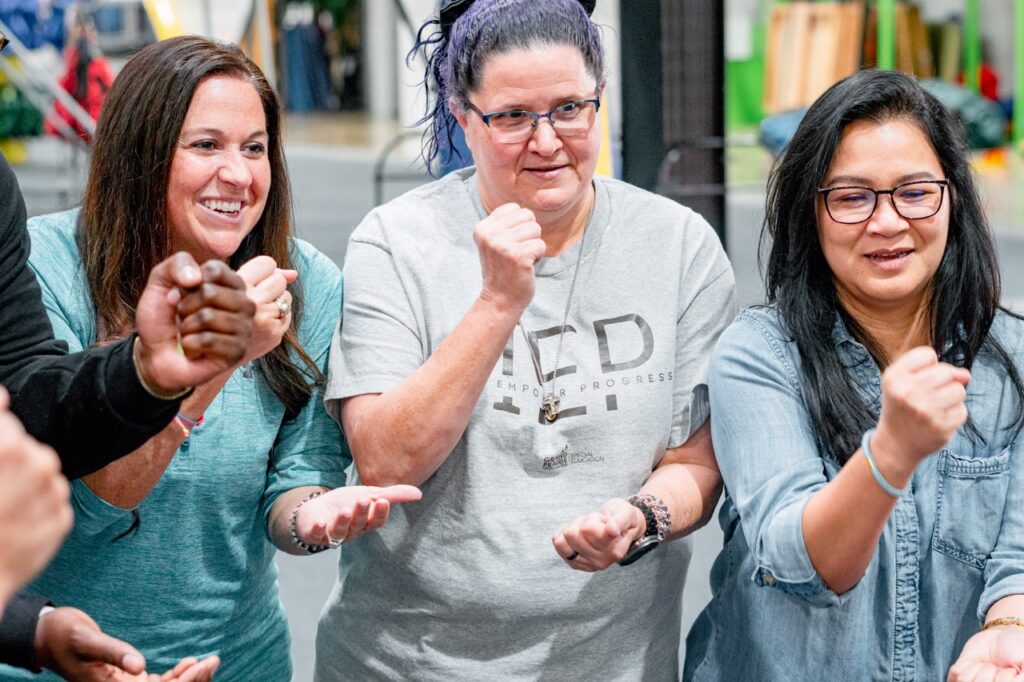
Team building. The phrase might conjure certain activities: trust falls, bowling nights, arcade games, corporate retreats, axe throwing, escape rooms, office potlucks. In other words, co-workers getting together to have some fun, blow off steam, and maybe get to know one another beyond their job titles.
But in today’s workplace, who has the bandwidth for team building?
Organizations are keeping pace with new technology, responding to changing markets, navigating tighter budgets, managing employee turnover, and onboarding new talent. Add hybrid and remote work into the mix, and gathering everyone in the same place can be a challenge.
So, is team building still worth the time?
As it turns out, the need for it may be greater than ever.
Benefits of Corporate Team Building?
Team Building Is Nothing New.
Far from being a passing corporate trend, the principles behind team building have influenced American workplaces for more than a century.
In the 1920s, research at Western Electric explored how workplace conditions and group dynamics affected employee performance. The studies helped bring greater attention to the relationship between productivity and the social experience of work, including the importance of feeling valued, connected, and part of a group.
Team-based experiential learning also found a place in military training during World War II. Educator Kurt Hahn helped develop learning experiences centered on challenge, cooperation, and personal responsibility. He later co-founded Outward Bound, where those principles were applied through wilderness experiences designed to develop leadership, resilience, and trust.
In the decades that followed, researchers continued studying the social and psychological dynamics of effective teams. Again and again, interpersonal relationships emerged as a critical part of the equation. Mutual trust, support, communication, and shared purpose became recognized as foundational to strong team performance.
By the 1970s and into the 2000s, team building had become an established part of corporate culture. Organizations increasingly recognized that attracting and retaining great people involved more than salary and benefits. Workplace culture mattered, too.
Team building became one way to intentionally strengthen that culture: supporting morale, communication, collaboration, leadership, and performance.
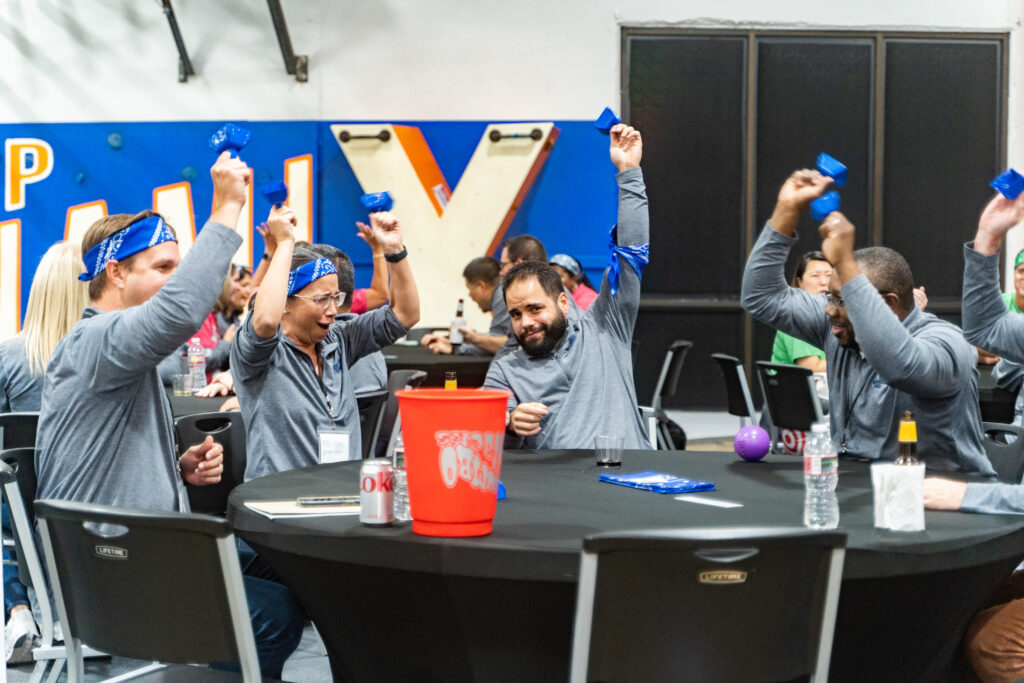
Then, the Workplace Changed.
The COVID-19 pandemic accelerated one of the most significant shifts in workplace culture in recent history.
Offices closed, teams dispersed, and millions of employees learned how to collaborate from home. Technology stepped in quickly. Zoom, Microsoft Teams, Google Meet, Slack, and other platforms let organizations keep operating across cities, states, and time zones.
The transition also revealed something technology has a harder time replacing: the informal, human moments that naturally happen when people share physical space.
A quick conversation before a meeting. Lunch with a colleague. Solving a problem together at a whiteboard. Celebrating a win as a group. Even the occasional water-cooler conversation.
For many organizations, flexibility and remote work created meaningful benefits. At the same time, maintaining connection, culture, and a shared sense of purpose became something teams had to approach much more intentionally.
As futurist John Naisbitt observed in Megatrends more than 40 years ago, “The more high technology around us, the more the need for human touch.”
That observation feels particularly relevant today.
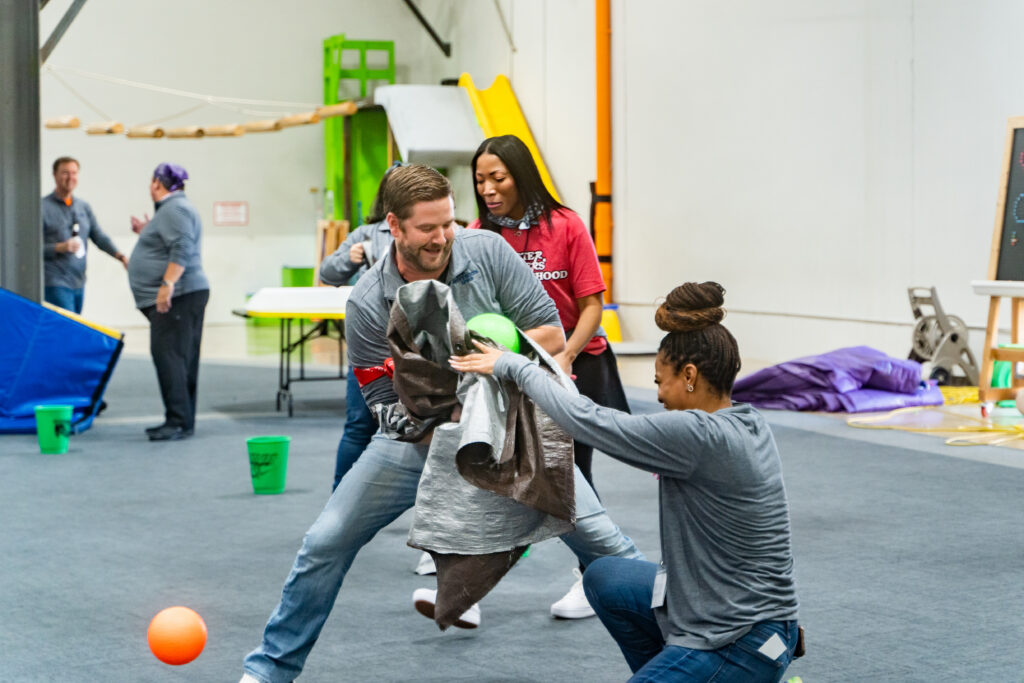
A New Workplace Requires New Ways to Connect
At the same time, technology and remote work were reshaping the workplace as a new generation began entering it.
Gen Z arrived with experiences shaped by digital communication, rapidly evolving technology, flexible learning environments, and, in many cases, school or early career experiences disrupted by the pandemic. Their arrival coincided with broader changes already underway across nearly every generation in the workforce.
The result isn’t necessarily a workforce that values connection less. It’s a workplace where connection happens differently, and where meaningful interaction can no longer always be left to chance.
Today’s teams may span generations, departments, locations, work styles, and communication preferences. Some employees spend every day together. Others may work alongside one another for months without ever sharing the same physical space.
That makes creating opportunities for genuine connection increasingly important.
That’s where team building can do what it has always done best.
Connection Comes First.
Successful teams aren’t built simply by putting talented people in the same room or the same Teams meeting. They’re built through shared experiences that develop trust, communication, cooperation, and a sense that everyone has a meaningful role to play.
For nearly three decades, Group Dynamix has been connecting people in fun ways through creative challenges, hands-on games, and adventure-based activities rooted in experiential learning.
The fun is important, but it’s not the whole point.
Cooperative problem-solving gives people an opportunity to move beyond their usual roles and interact in new ways. Shared challenges can break down silos and encourage collaboration. Working toward a common goal creates opportunities for participation and buy-in across different personalities, backgrounds, departments, and leadership levels.
And when a group solves a problem together, there’s something technology can’t quite replicate: the experience of sharing the win.
That experience can carry back into the workplace.
At Group Dynamix, we treat every participant as a valued member of the team. Through shared challenges, teams have an opportunity to practice the very things strong workplace cultures depend on: communicating clearly, trusting one another, adapting, contributing, and working toward something bigger than any one person.
The workplace will continue to evolve. Technology will continue to change how we communicate and collaborate. New generations will continue to bring different experiences and perspectives to work.
But one thing hasn’t changed much in a hundred years of studying teams:
People work better together when they feel connected.
And sometimes, building that connection starts by stepping away from the screen and simply doing something together.
Engaging Company Events
Corporate Events, Group Outings, Private Events, Charities, Meetings, and More...